






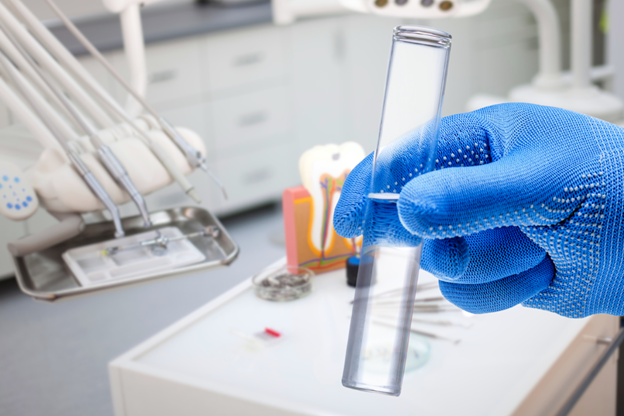
Dental unit water lines (DUWLs) play an important role in dental practices, as they facilitate the delivery of water to essential tools – including high-speed handpieces, air/water syringes, and ultrasonic scalers.
But did you know that the quality of the water also plays a pivotal role in the longevity of your dental handpieces?
These waterlines are prone to potential bacterial colonization and the formation of biofilm due their design, consisting of long, narrow tubing and varying rates of water flow. Unfortunately, these conditions can create an environment that fosters bacterial growth, which poses both a risk to dental health professionals and patients if the water isn’t properly treated.
Risks Associated with Untreated Water
Untreated water in dental units can harbour high levels of what’s referred to as heterotrophic water bacteria, which can often exceed the safe thresholds for drinking water standards.
This bacterial growth can be caused by oral fluids, which are retracted during dental procedures, worsening potential contamination.
This is why it’s imperative to adhere to very strict water quality standards, as it prevents potential health risks associated with dental procedures that require water-powered tools.
The Risks of Poor Water Quality on Dental Handpieces
Water quality doesn’t just impact health and safety measures, it also impacts the longevity of dental handpieces. However, few fully understand the extent of the impact that poor water quality can have on the tools themselves.
Poor water quality can impact dental handpieces in the following ways:
1. Poor Water Quality Can Cause Corrosion
Poor water quality, combined with dangerous levels of minerals or salts, can lead to the corrosion of dental tools, including their internal components.
This corrosion can weaken the handpiece’s overall instructional integrity, leading to breakdown and premature failure.
2. Poor Water Quality Can Cause Clogging
Water with higher levels of sediment or particulate matter can actually clog the small internal channels and nozzles within the dental handpiece, restricting water flow through the tool and affecting its ability to cool itself down and its overall performance.
3. Poor Water Quality Can Exacerbate Biofilm Formation
Water containing serious bacteria or microbial contaminants can cause the formation of biofilms (a syntrophic community of microorganisms in which cells stick to each other and surfaces) inside the handpiece waterlines.
Biofilms tend to build up over time, causing blockages, foul odours, and potential contamination of the handpiece completely, as well as its components.
4. Poor Water Quality Can Cause Lubrication Issues
Poor quality or contaminated water can compromise the efficiency of the handpiece’s internal lubrication systems. This can cause increased friction and wear and tear on the moving parts, reducing the tool’s lifespan and potentially impacting its performance.
5. Poor Water Quality Compromises Patient Safety
As we mentioned briefly, waterborne contaminants can pose a potentially serious risk to patient safety, as they could be brought into the oral cavity during dental procedures. This can be highly dangerous not just for your patients (who are the most important in this equation) but also for your business’ reputation.
Contaminants are especially concerning for those who are immunocompromised or those who already have underlying health conditions.
Mitigation of Water Quality Issues
To mitigate issues caused by poor water quality, dental professionals utilize water treatment systems such as filters, purifiers, and chemical treatment procedures to make sure that the water they use in their dental handpieces meets the regulated quality standards.
Regular maintenance and cleaning of the handpieces are also essential to prevent wear, tear, and buildup over time, ensuring maximum performance and hygiene.
Regulatory Standards and Treatment Methods
Safety is a top priority for all dental practices and should exist at the forefront of every practice and procedure. To keep your practice and patients safe, all dental units must adhere to guidelines requiring water treatment systems capable of maintaining bacterial counts at or below 500 colony-forming units per milimeter (CFU/mL).
There are effective commercial products and devices available that are designed specifically to enhance the water quality used in most dental treatments. If you have concerns, consult with the dental unit manufacturer on how to implement appropriate water maintenance protocols and how to properly monitor and uphold optimal water quality standards.
Impact on Instrument Reprocessing and Sterilization
Water quality goes well beyond treatment systems directly connected to the dental tools – rather, it also profoundly impacts the efficiency of processes such as instrument reprocessing and sterilization.
There are several aspects of water quality, such as bacterial levels, endotoxin content, and the presence of heavy metals, that directly influence the outcomes of these essential processes.
Ultrasonic Cleaners
In most dental practices, water used for ultrasonic cleaning must be carefully prepared. Tap water, for example, may be accessible, but it contains dissolved gases that can interfere with the effectiveness of ultrasonic cleaning procedures. Proper water degassing is required before it is used in the ultrasonic cleaners to eliminate these dissolved gases, ensuring the best possible cleaning performance.
Cleaning and Rinsing Instruments
The water used in cleaning dental instruments is required to meet specific criteria to maintain cleanliness and avoid possible contamination. Low levels of viable bacteria and bacterial products (i.e. endotoxins) are essential.
As well, water needs to be free from heavy metals and other possible contaminants that could compromise the cleaning procedure. The hardness of water, for example, is influenced by calcium and magnesium salts, impacting the effectiveness of detergents used in instrument cleaning.
Techniques like water softening (which uses ion-exchange resins) help mitigate the adverse effects of hard water by replacing the calcium and magnesium ions with sodium or potassium ions.
Practical Considerations and Challenges
Implementing proper systems for water treatments and quality assurance in dental practices involves properly navigating practical challenges and considerations.
For instance, reverse osmosis systems need regular pre-treatment filters to prevent membrane clogging. Water deionizers also have to periodically regenerate ion-exchange resins to maintain good water quality.
The choice between ion exchange, distillation, and reverse osmosis depends on several factors, such as water hardness, local water quality, and operational requirements.
Developing an Effective Dental Unit Waterline Testing and Management Program
Ensuring the safety and quality of water used in dental practices is essential to protecting the health of both patients and dental staff alike. Implementing strategic dental unit waterline (DUWL) maintenance and testing programs is required to maintain compliance with public health standards and professional guidelines. Ensuring the safety and quality of water used in dental practices is essential to protecting the health of patients and dental staff.
Implementing strategic dental unit waterline (DUWL) maintenance and testing programs is required to maintain compliance with public health standards and professional guidelines.
Taking a comprehensive approach involves:
- Crafting planning protocols.
- Choosing appropriate testing systems.
- Educating your staff.
- Implement proactive maintenance strategies that you update over time.
Planning Your Protocol
To develop a proper DUWL maintenance and testing program, you must review relevant public health guidelines and standards. Also, you should consult the recommendations established by professional dental or hygiene colleges, such as the IPAC Standards of Practice from the Royal College of Dental Surgeons of Ontario (RCDSO). These guidelines can be essential to stay up-to-snuff regarding regulatory requirements.
While these standards provide essential operational guidelines, they may not include all detailed water testing and disinfection protocols. Continued education and staying up to date with regulations are required.
Selecting a Suitable Water Testing System
Choosing the right water quality testing system is required when establishing an effective DUWL maintenance program. There are several products available on the market, each with several unique features. However, beyond just choosing products, ensuring staff knowledge and comfort with the testing system is needed.
Many dental professionals’ express concerns about understanding and correctly using water quality testing products. Continued education and keeping up to date with regulatory changes are required to ensure you and your staff have the knowledge you need.
Education and Training
Once a reliable testing system is selected, comprehensive training for staff becomes imperative. Training should cover procedures for taking and interpreting water samples, operating the testing system effectively, and understanding corrective actions in response to failed tests.
Product representatives can conduct training sessions through online modules or with the guidance of infection prevention and control (IPAC) consultants.
Empowering dental staff with the knowledge and skills to conduct sampling and testing accurately enables them to generate meaningful data. This data provides insights into microbial levels within DUWLs, facilitating informed decisions on necessary interventions and DUWLs maintenance.
Choose Sable Industries
By understanding the impact of water quality on instrument reprocessing, sterilization, and overall clinical outcomes, dental professionals can uphold the highest standards of patient care and safety in their practices.
Sable Industries is a leading Canadian manufacturer and distributor specializing in high-speed handpieces, slow-speed handpieces, dental repair parts, and other premium dental supplies. We’re a leading provider of dental tools and are well-equipped to help you with all your handpiece questions and needs.
Contact us today for more details on how to maintain the longevity of dental handpieces.